
Intent
Avoid losing or overwriting chart attachments when a week is recomputed and then enriched later.
Context
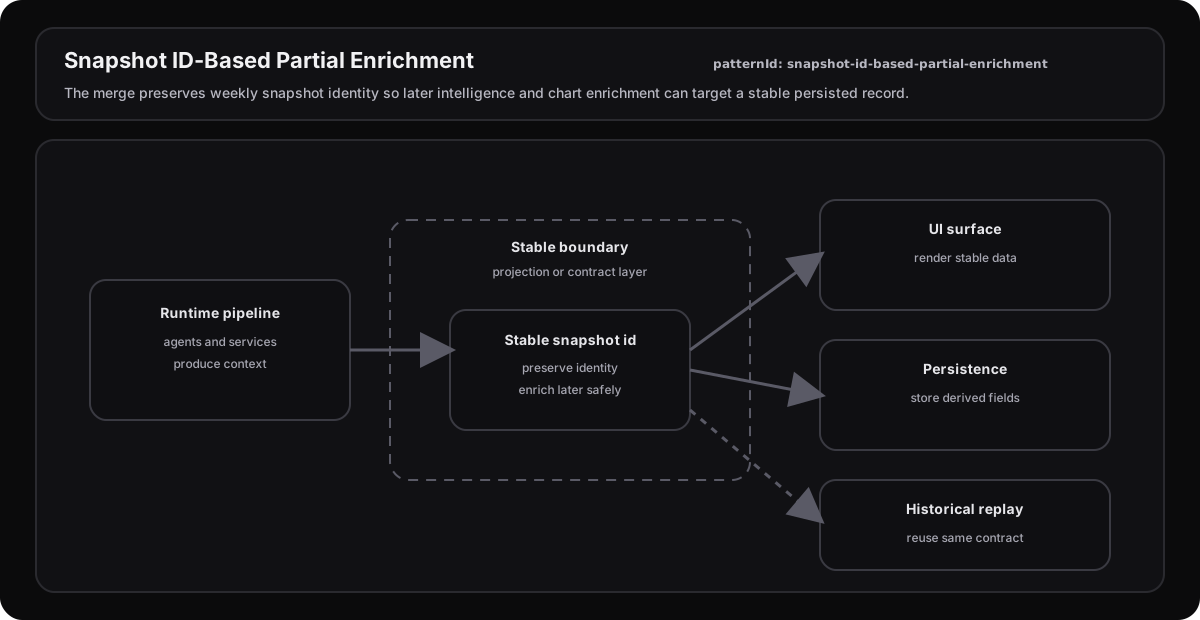
The service preserves an existing snapshot id during recompute and later uses that id for chart-specific updates. The merge preserves weekly snapshot identity so later intelligence and chart enrichment can target a stable persisted record.
Agentic profile
- System shape: hybrid
- Orchestration mode: sequential
Agent-to-agent interaction
- Present: false
- Mechanism: unknown
Tool protocols
- MCP: absent
- Tool calling: absent
- Evidence: Recompute preserves snapshot identity and later enrichment updates target that stable record.
Optimisation target
- Primary: reliability
- Secondary: safety
- Notes: Preserving stable identity avoids writing chart enrichments onto the wrong weekly record.
Simplicity vs autonomy
- Position: simplicity
- Rationale: Identity preservation constrains enrichment to one snapshot instance rather than regenerating independent records.
Forces
- Weekly metrics are recomputed before intelligence artefacts are added.
- Language and week-based updates can otherwise target the wrong record.
Solution
When recomputing a week, reuse the existing cached snapshot id if present; then update intelligence-specific fields such as charts by snapshot id rather than only by week key.
Implementation signals
- Recompute path assigns
weekly_snapshot.idfrom the affected cached snapshot. - Repository update for charts uses
WHERE id = ?.
Evidence
- The recompute path preserves the existing snapshot id when rebuilding a week.
- Later chart enrichment updates target snapshot identity rather than only the week key.
Consequences
Benefits
- Preserves chart associations across recomputes.
- Supports later partial enrichment of already-persisted weekly rows.
Costs
- Makes the persistence lifecycle multi-phase.
- Requires careful id propagation between cache, service, and repository.
Failure modes
- Missing or stale ids can still orphan enrichments.
- If the cache is wrong, the wrong snapshot id may be preserved.
Reuse notes
- Useful when derived artefacts are added after the main persistence write and must target a stable aggregate record.
- Use it when reliability matters more than maximizing autonomous generation everywhere.
Confidence
High. Confidence is high because the pattern is evidenced directly in the PR132 code paths and tests, with breadth consistent with a stable pattern rather than speculation.