
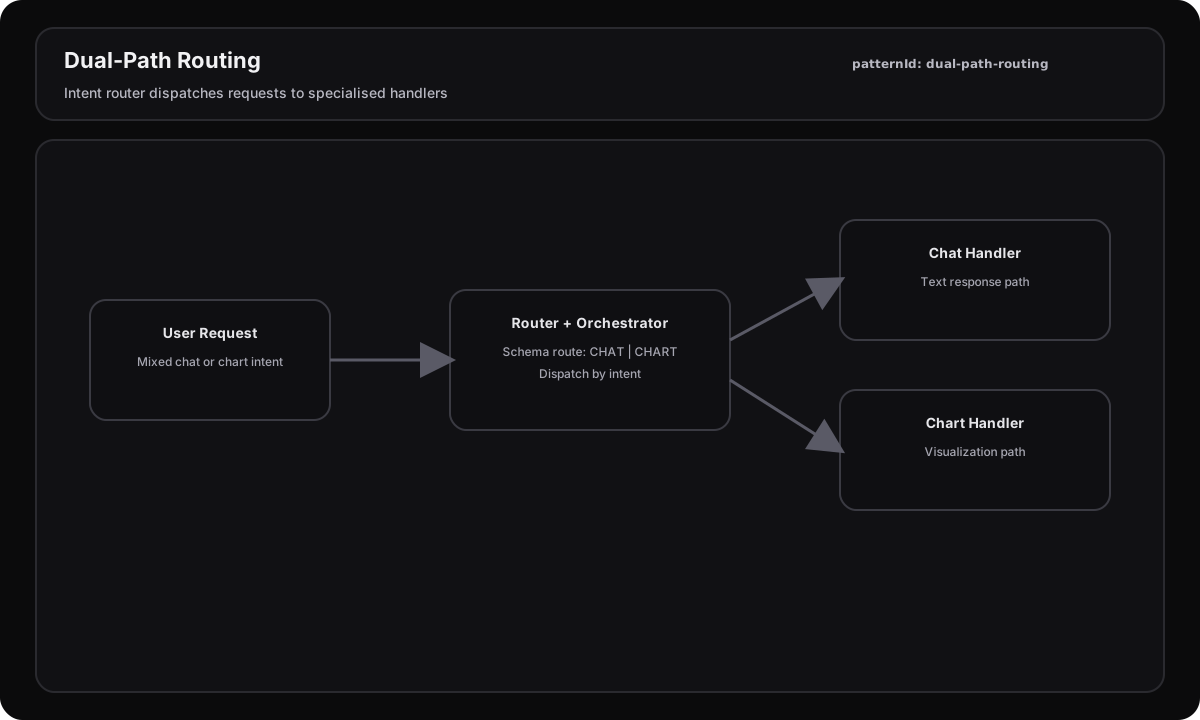
Intent
Direct user queries to the most appropriate specialized handler.
Context
Used to decide between generating a chart or returning a text response. A lightweight LLM classification produces an intent decision (CHAT vs CHART), and the orchestrator dispatches to the corresponding agent.
Agentic profile • System shape: unknown • Orchestration mode: unknown
Agent-to-agent interaction • Present: unknown • Mechanism: unknown • Evidence: unknown
Tool protocols • MCP: unknown • Tool calling: unknown • Evidence: unknown
Optimisation target • Primary: unknown • Secondary: unknown • Notes: unknown
Simplicity vs autonomy • Position: unknown • Rationale: unknown
Forces • Specialized capabilities • Efficiency
Solution • Add a router that classifies user intent into a small set of routes (e.g., CHAT vs CHART). • Use a schema for the route decision to keep routing predictable. • Dispatch from the orchestrator to the specialized handler based on the router result.
Implementation signals • Dedicated router module • Intent classification schema
Evidence • src/router/router.py#async_route — Returns RouteDecision • src/agents/orchestrator.py#ADKOrchestrator.chat — Dispatches based on intent
Consequences
Benefits • Separation of concerns • Optimized handling
Costs • Latency of extra LLM call • Router accuracy dependency
Failure modes • Misclassification leads to wrong agent
Reuse notes • Use a router when handling diverse request types. • Keep the route set small and the decision schema explicit.
Confidence
High — routing and dispatch behavior are evidenced in both the router and orchestrator.