
Intent
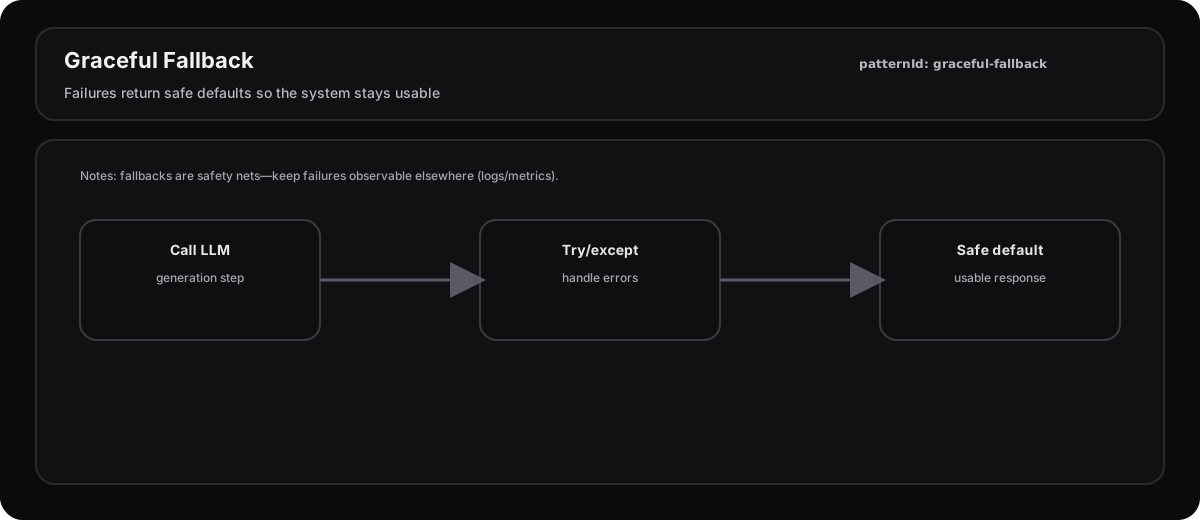
Ensure the system remains functional even if LLM generation fails.
Context
Used when handling errors in insights, plan, and routing components. This applies where user experience and service continuity matter more than perfect outputs, and where transient provider/model failures are expected.
Agentic profile • System shape: unknown • Orchestration mode: unknown
Agent-to-agent interaction • Present: unknown • Mechanism: unknown • Evidence: unknown
Tool protocols • MCP: unknown • Tool calling: unknown • Evidence: unknown
Optimisation target • Primary: unknown • Secondary: unknown • Notes: unknown
Simplicity vs autonomy • Position: unknown • Rationale: unknown
Forces • Reliability • User experience
Solution • Catch exceptions around LLM calls (try/except). • Return a default safe response object or a generic error structure. • For routing, fall back to a safe route when classification fails.
Implementation signals • Try/except blocks around LLM calls • Return default objects on error
Evidence • src/agents/insights/agent.py#InsightsAgent._fallback_error — Returns generic error structure • src/router/router.py#async_route — Falls back to CHAT on error
Consequences
Benefits • System resilience • Prevents crashes
Costs • Masks underlying issues • Degraded functionality
Failure modes • Fallback might be inappropriate for context
Reuse notes • Always wrap LLM calls in try/except with defaults. • Treat fallbacks as safety nets and ensure failures remain observable elsewhere (e.g., logs).
Confidence
High — fallback behaviors are explicitly evidenced in both the insights agent and router.