
Intent
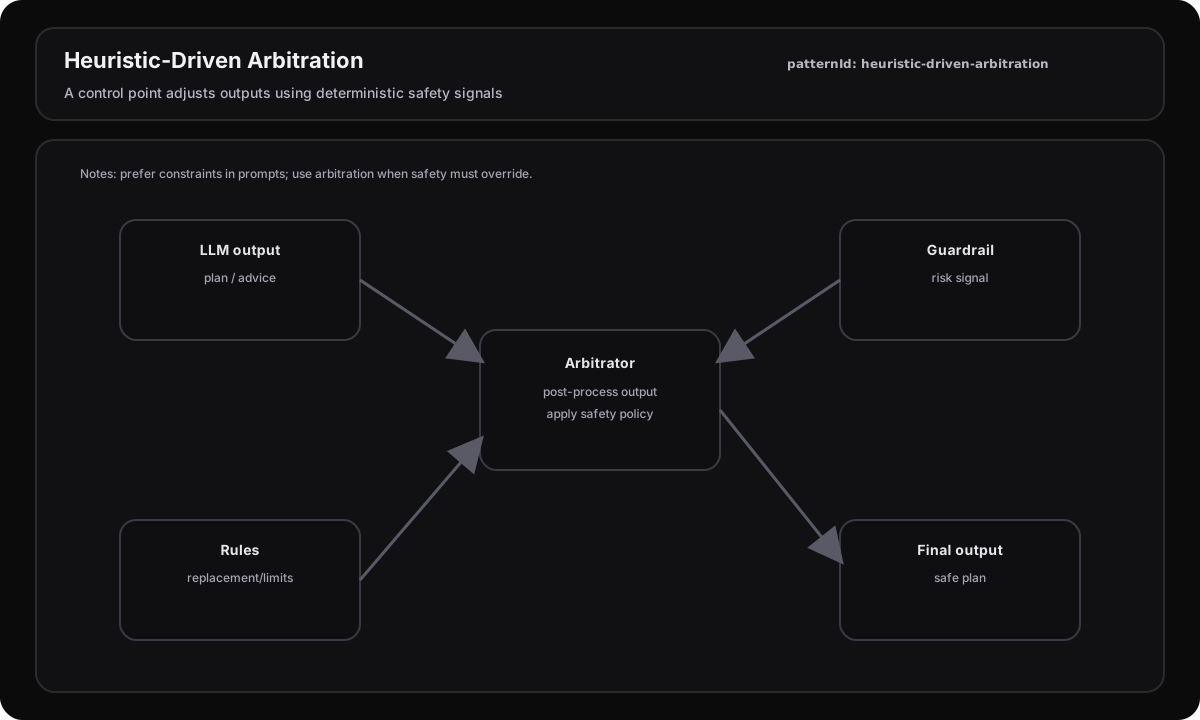
Modify LLM outputs based on safety signals from other components.
Context
Used to modify the training plan based on the risk level produced by a guardrail agent. This applies when a downstream LLM output must be overridden or adjusted to comply with safety requirements.
Agentic profile • System shape: unknown • Orchestration mode: unknown
Agent-to-agent interaction • Present: unknown • Mechanism: unknown • Evidence: unknown
Tool protocols • MCP: unknown • Tool calling: unknown • Evidence: unknown
Optimisation target • Primary: unknown • Secondary: unknown • Notes: unknown
Simplicity vs autonomy • Position: unknown • Rationale: unknown
Forces • Safety override • LLM hallucination risk
Solution • Intercept the LLM-generated plan in the orchestrator. • Modify the plan using conditional post-processing based on the risk assessment. • Apply string manipulation to replace intensity-related terms when risk is high.
Implementation signals • Post-processing logic in orchestrator • Conditional modification of agent output
Evidence • src/agents/orchestrator.py#ADKOrchestrator._apply_guardrails_to_plan — Replaces intensity keywords if risk is HIGH
Consequences
Benefits • Enforces safety on final output • Centralized control
Costs • Brittle string manipulation • Coupling between orchestrator and output format
Failure modes • Replacement fails if the LLM changes terminology
Reuse notes • Use with caution; prefer prompting the LLM with constraints over post-hoc string editing. • If used, keep replacement rules small and tightly scoped to known output formats.
Confidence
High — the arbitration method is explicitly referenced as an orchestrator post-processing step tied to a safety signal.