
Intent
Reduce cost and lock-in risk by making LLM choice a configuration concern rather than a code rewrite.
Context
Agentic systems often depend on closed models or provider-specific APIs. Switching providers later creates friction, rework, and inconsistent behaviour.
Forces
- Portability vs provider-specific features
- Cost control vs performance
- Consistency vs model diversity
- Operational simplicity vs flexibility
Solution
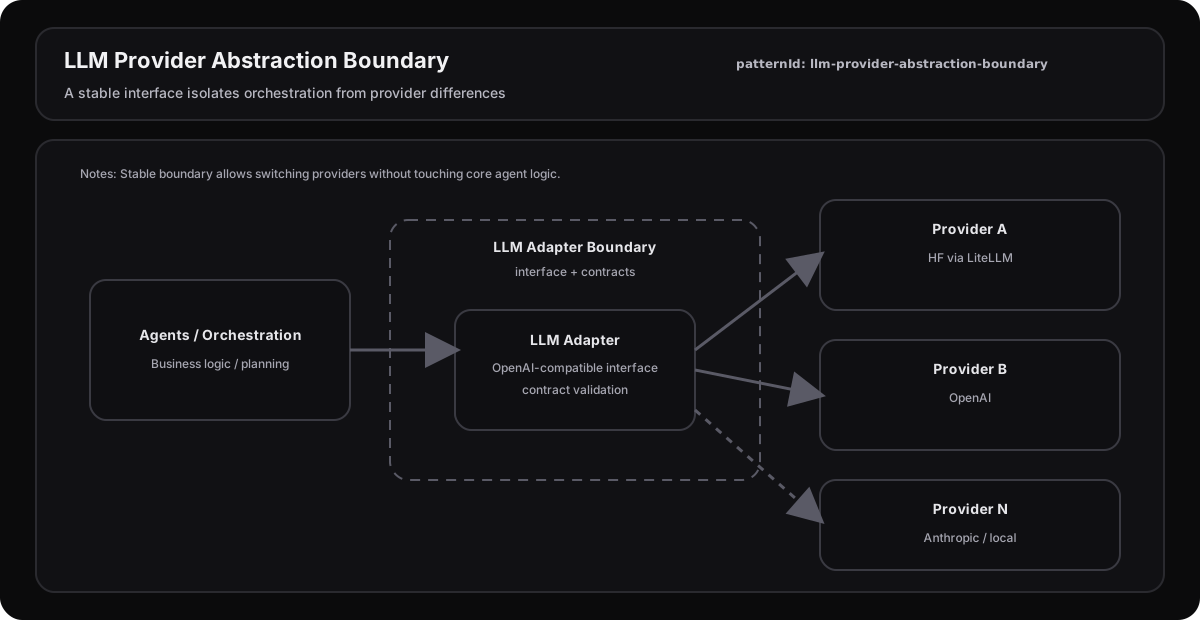
Create a clear boundary between:
- Agent/orchestration logic (provider-agnostic)
- LLM adapter layer (provider-specific implementation)
Expose a stable interface (OpenAI-compatible or similar), and route all model calls through the adapter. Keep model selection in config, not code.
Implementation signals
- A single “LLM client” used across agents
- Provider/model selection occurs via configuration
- Regression tests run across multiple providers with the same prompts/contracts
Consequences
Benefits
- Faster provider switching and experimentation
- Reduced rewrite risk
- Clearer cost/performance trade-offs
Costs
- Adapter layer may hide provider-specific capabilities
- Differences across models still require careful prompt/contract design
Failure modes
- Abstraction leaks under non-standard features (tools, vision, structured outputs)
- Behaviour differences across models create false confidence if untested
Reuse notes
Start with the smallest stable interface:
- text completion + structured output
- logging and retries at the boundary
- optional provider-specific extensions behind feature flags
Confidence
High — repeatedly surfaced when integrating multiple providers and debugging cross-provider issues.