
Intent
Ensure a strict, repeatable sequence of processing steps so analysis generation is consistent.
Context
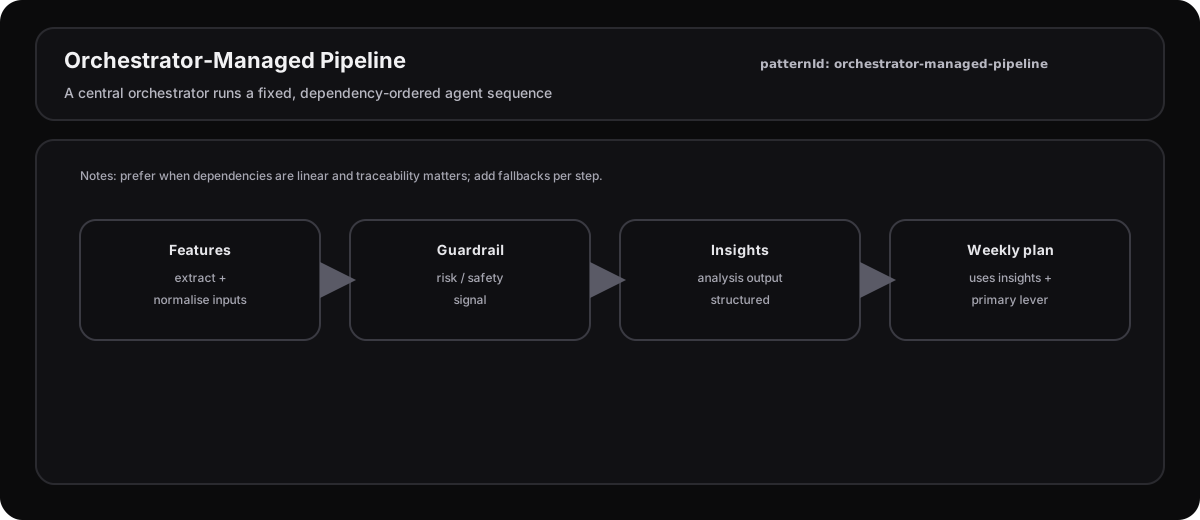
Used in the main analysis flow where data dependency is linear and each step depends on outputs from the previous one (features → risk → insights → plan). This fits workflows where the order is fixed and predictable execution matters.
Agentic profile • System shape: unknown • Orchestration mode: unknown
Agent-to-agent interaction • Present: unknown • Mechanism: unknown • Evidence: unknown
Tool protocols • MCP: unknown • Tool calling: unknown • Evidence: unknown
Optimisation target • Primary: unknown • Secondary: unknown • Notes: unknown
Simplicity vs autonomy • Position: unknown • Rationale: unknown
Forces • Data dependency • Consistency requirement
Solution • Implement a central orchestrator class. • The orchestrator explicitly calls each agent in a predefined order. • Outputs from one step are passed as inputs to the next step.
Implementation signals • Sequential method calls in orchestrator.run • Explicit data passing between steps
Evidence • src/agents/orchestrator.py#ADKOrchestrator.run — Sequence: feature_agent → guardrail_agent → insights_agent → plan_agent
Consequences
Benefits • Predictable execution • Easy to debug • Clear data lineage
Costs • Rigid flow • Harder to handle dynamic dependencies
Failure modes • Pipeline breaks if one step fails
Reuse notes • Use for batch processing workflows where the step order is fixed. • Prefer when dependencies are linear and you want clear handoffs between steps.
Confidence
High — the orchestrator sequence is directly evidenced in the orchestrator run method and described as an explicit step order.