
Intent
Improve reliability by constraining agent outputs through explicit structure rather than relying on model intelligence.
Context
Agentic systems fail subtly when outputs are ambiguous: inconsistent formatting, missing fields, low-actionability. These failures often appear as “quality issues” rather than bugs.
Forces
- Flexibility vs consistency
- Speed of iteration vs robustness
- Human readability vs machine parsing
- Model creativity vs output determinism
Solution
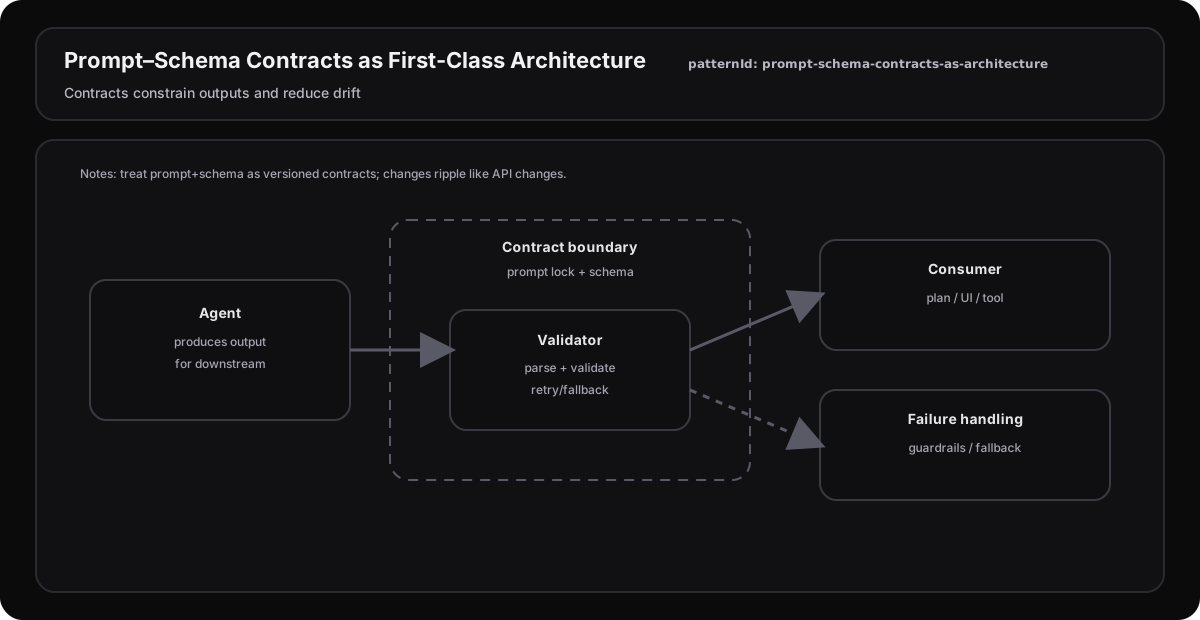
Define explicit contracts for agent outputs:
- prompts with structure locks
- JSON schemas (or typed models) for outputs
- validation at boundaries
- retries or fallbacks when validation fails
Treat these artefacts as part of the system architecture (versioned, reviewed, tested).
Implementation signals
- Output is specified as JSON with required fields
- Schema validation is enforced before downstream use
- Prompts include explicit sections, constraints, and stopping conditions
- Quality improvements occur after structure changes, not model changes
Consequences
Benefits
- More consistent outputs and fewer silent failures
- Easier debugging (contract breaks are observable)
- Safer composition across agents and pipelines
Costs
- More upfront design effort
- Tighter constraints can reduce expressiveness
Failure modes
- Over-constrained prompts produce robotic or unhelpful content
- Schema changes ripple if not versioned
Reuse notes
Start with contracts at the highest-leverage boundaries:
- insights output
- planning output
- tool call payloads
Add validation early, even if basic.
Confidence
High — repeatedly observed that structure and contracts, not model capability, determined usefulness.