
Intent
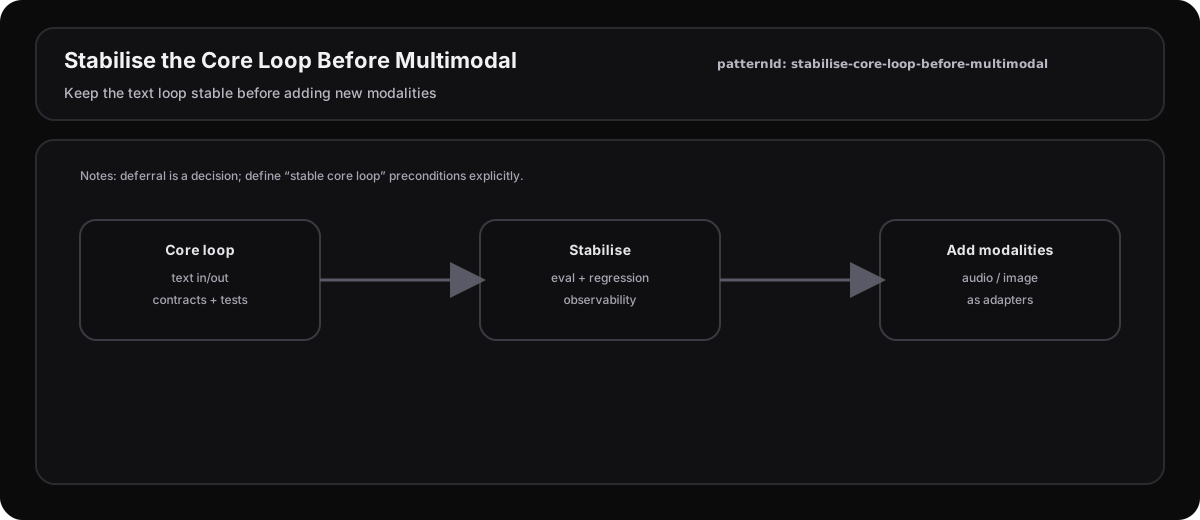
Avoid compounding complexity by stabilising the agentic control loop and contracts before introducing new modalities.
Context
Adding image/audio inputs or outputs expands:
- data types
- toolchains
- failure modes
- evaluation surface
If the core loop is unstable, multimodal work becomes hard to diagnose and easy to misattribute.
Forces
- Product ambition vs architectural clarity
- Learning speed vs reliability
- Feature breadth vs debuggability
Solution
Define a clear “core loop” (inputs → reasoning → tools → outputs) and stabilise it first:
- contracts (prompt/schema)
- evaluation and regression tests
- observability and traceability Only then expand modalities behind flags or separate adapters.
Implementation signals
- Explicit decision to defer multimodal scope
- Regression tests focus on core text workflows
- Modalities planned as adapters rather than embedded into core logic
Consequences
Benefits
- Faster learning with lower debugging overhead
- Clearer evidence of what improved quality
- Safer incremental expansion
Costs
- Slower delivery of multimodal features
- Some insights may be delayed until richer inputs exist
Failure modes
- “Deferral” becomes permanent avoidance
- Multimodal requires rethinking contracts if postponed too long without design foresight
Reuse notes
Make deferral explicit:
- define what “core loop stable” means
- list preconditions for enabling multimodal
- keep a small spike path to avoid total blindness
Confidence
Medium — observed as a repeated scope control move; broader validation still pending.