
Intent
Ensure LLM responses are machine-readable and conform to a specific format.
Context
Used when generating insights and plans that must be parsed, stored, or integrated with UI/DB flows. This applies where type safety and consistent structure at the LLM boundary reduces downstream errors.
Agentic profile • System shape: unknown • Orchestration mode: unknown
Agent-to-agent interaction • Present: unknown • Mechanism: unknown • Evidence: unknown
Tool protocols • MCP: unknown • Tool calling: unknown • Evidence: unknown
Optimisation target • Primary: unknown • Secondary: unknown • Notes: unknown
Simplicity vs autonomy • Position: unknown • Rationale: unknown
Forces • Integration with UI/DB • Type safety
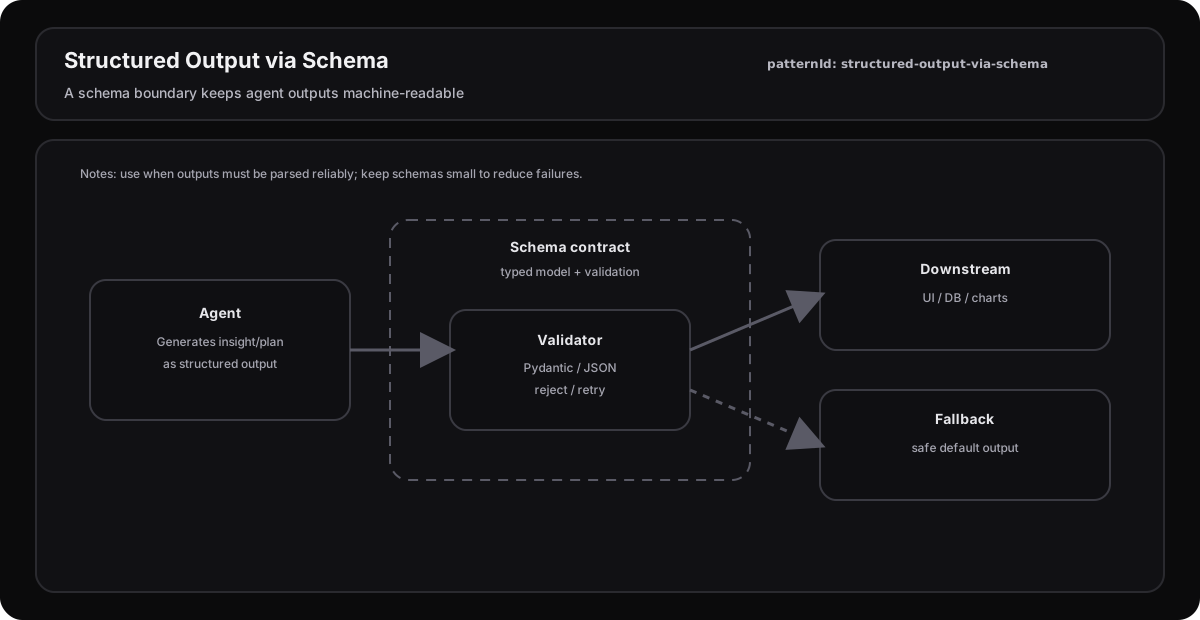
Solution • Define expected outputs as Pydantic models. • Pass the schema to the LLM client to constrain generation. • Validate the resulting LLM output against the schema before using or storing it.
Implementation signals • Pydantic models in models.py • Usage of schema argument in llm_client.generate
Evidence • src/agents/insights/agent.py#InsightsAgent.run — Uses InsightsOutput schema • src/llm/structured.py#validate_structured_output — Validation logic
Consequences
Benefits • Reliable parsing • Type checking • Clear interface
Costs • Prompt overhead • LLM may struggle with complex schemas
Failure modes • Validation errors if LLM deviates
Reuse notes • Define Pydantic models for all agent outputs. • Keep schemas as simple as possible to reduce validation failures.
Confidence
High — the agent and validation logic are directly evidenced via schema usage and a dedicated validation function.